Saltwater is tough on boats — and even tougher on electrical systems. Corrosion is one of the most common causes of electrical failures onboard, and the earlier it’s caught, the easier (and cheaper) it is to fix.
Here’s what every boat owner should know about spotting corrosion early.
Corrosion happens when salt, moisture, and oxygen react with metal. On boats, it most often attacks:
-Battery terminals -Wire connections -Grounding points -Shore power plugs and outlets -Electrical panels and bus bars
Once corrosion starts, it spreads — causing resistance, voltage drop, overheating, and eventual equipment failure.
Early Warning Signs of Corrosion
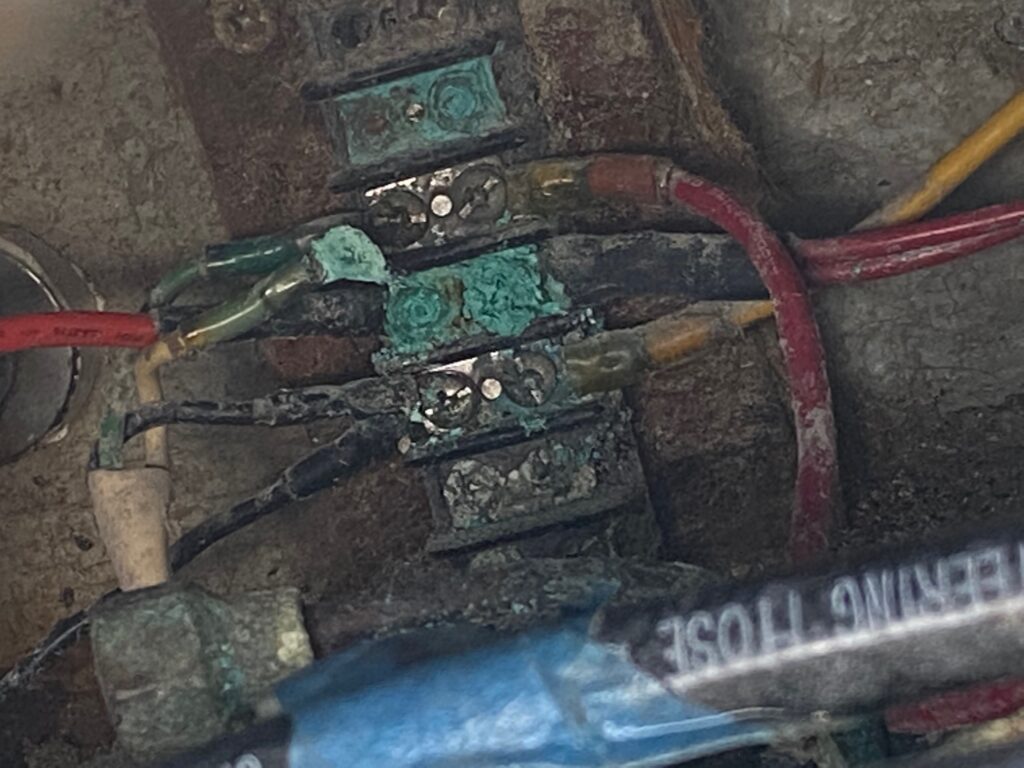
1. White, Green, or Blue Powder on Metal
This chalky or fuzzy buildup on terminals or wires is corrosion in progress.
2. Rust on Battery Trays or Hold-Downs
Rust nearby often means moisture is present — and corrosion is likely happening out of sight too.
3. Flickering or Dim Electronics
Corroded connections create resistance, leading to inconsistent power.
4. Electronics Randomly Resetting or Shutting Off
Voltage drops from corrosion can cause devices to reboot or fail.
5. Breakers That Trip or Fuses That Blow Repeatedly
This can indicate increased resistance or overheating in a corroded circuit.
6. Burnt Smell or Warm Electrical Parts
Corrosion causes heat — and heat is dangerous on a boat.
Why Early Action Matters
© 2021 All Rights Reserved.
